Human beings are wired for connection. We crave closeness, understanding, and a sense of belonging. Whether it's through friendships, family, or romantic relationships, we all want to feel seen, valued, and loved.
But not all connections are healthy. Sometimes, what we call love… is actually attachment. Sometimes, what we hold onto… is quietly hurting us.
What Is an Unhealthy Emotional Bond?
An unhealthy emotional bond is a connection rooted more in fear, dependency, or insecurity than in genuine love, respect, and stability. It can feel intense. It can feel real. It can even feel irreplaceable. But at its core, it often involves fear of being abandoned, a constant need for reassurance, emotional dependence on another person, and difficulty letting go — even when the relationship is harmful.
Psychological research, particularly attachment theory, explains that the way we bond with others is often shaped by our past experiences — especially early emotional relationships. When those experiences involve inconsistency, loss, or emotional pain, it can lead to insecure attachment patterns that follow us into adulthood.
Signs You May Be in an Unhealthy Bond
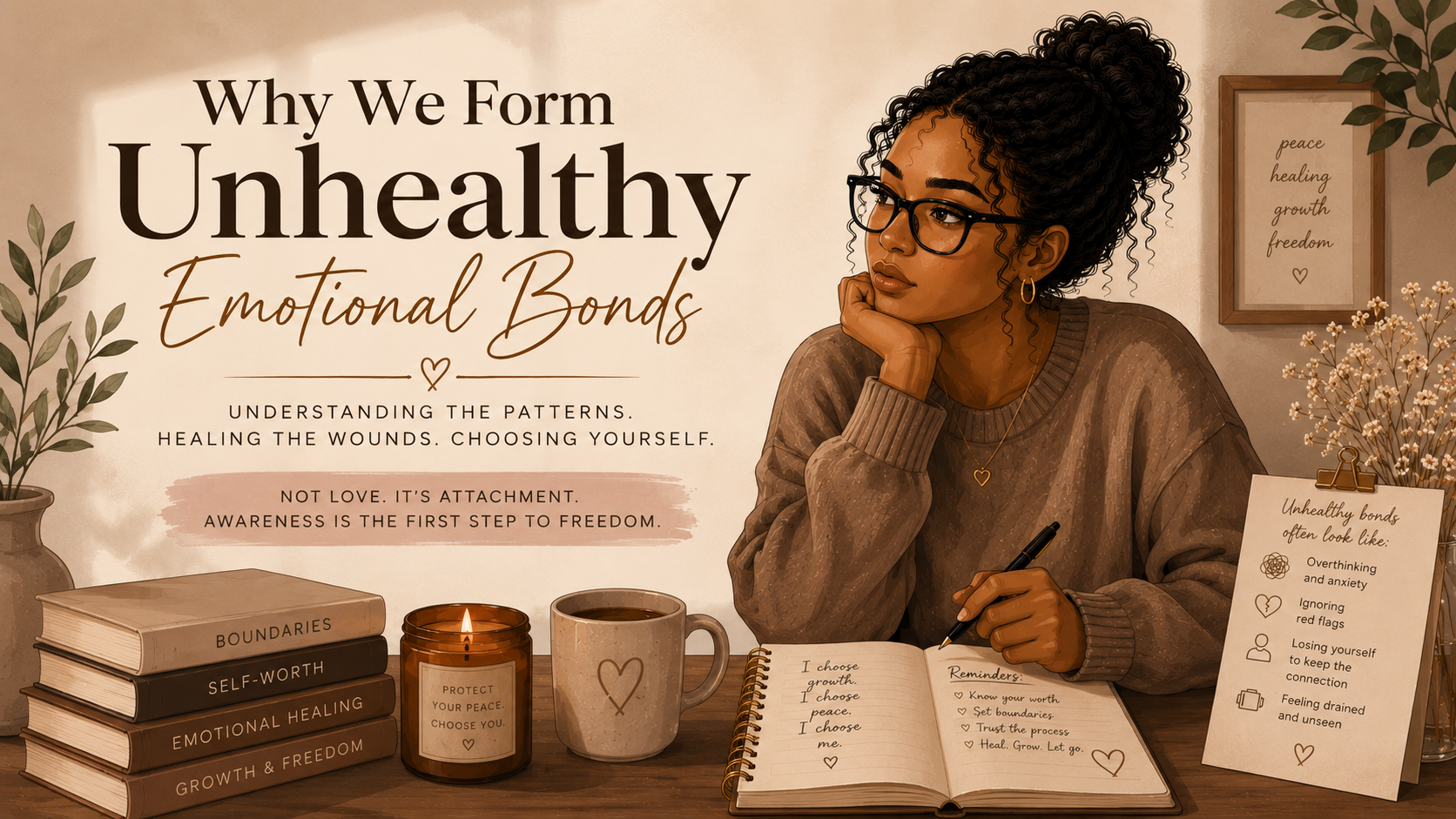
Unhealthy bonds don't always look toxic on the surface. Sometimes, they feel deeply personal and difficult to explain. A few signs to look out for:
- You feel anxious when someone doesn't respond or pulls away
- You overthink small changes in behavior or tone
- You stay in situations where you feel undervalued or disrespected
- You feel responsible for someone else's emotions or actions
- You give more than you receive, but struggle to walk away
- You ignore red flags because you don't want to lose the person
"Over time, the relationship becomes less about connection… and more about maintaining emotional survival."
How Our Experiences Shape Our Attachments
Unhealthy emotional bonds don't come from nowhere. They are often rooted in grief and loss, emotional neglect or inconsistency, past rejection or betrayal, and low self-worth or identity struggles.
When you've experienced loss or instability, your mind and body can begin to seek familiar emotional patterns, even if those patterns are unhealthy. You may find yourself drawn to people who feel emotionally intense, are inconsistent or unpredictable, or require you to "earn" their attention or affection — not because it's healthy, but because it feels familiar.
Unhealthy Bonds Aren't Just Romantic
One of the biggest misconceptions is that unhealthy attachment only happens in romantic relationships. It doesn't. You can form unhealthy emotional bonds in friendships, family relationships, and everyday connections. In friendships, it might look like one-sided effort, feeling drained after interactions, or always being the "strong one." In family, it might be guilt-based loyalty or feeling responsible for everyone else's emotional state.
When attachment replaces balance, the relationship stops being a safe space.
Why It's So Hard to Let Go
Letting go of an unhealthy bond is not just about walking away from a person. It's about letting go of the comfort they provided, the version of yourself you were with them, and the hope that things could be different.
You're not just grieving the relationship — you're grieving the role it played in your life. That's what makes it difficult.
Healing and Rebuilding Healthy Connections
Healing doesn't mean shutting yourself off from people. It means learning how to connect from a place of wholeness instead of fear. Some steps toward healing include building self-awareness of your emotional triggers and patterns, setting boundaries that protect your time and peace, learning to sit with yourself — not as loneliness, but as stability — and choosing consistency over intensity.
Not every strong connection is meant to be kept. Some relationships come into our lives to teach us about our needs, our wounds, and our boundaries.
The goal is not to avoid connection. The goal is to choose better connections — the ones that don't require you to shrink, chase, or lose yourself. Because real, healthy love should never cost you your peace. — Nette