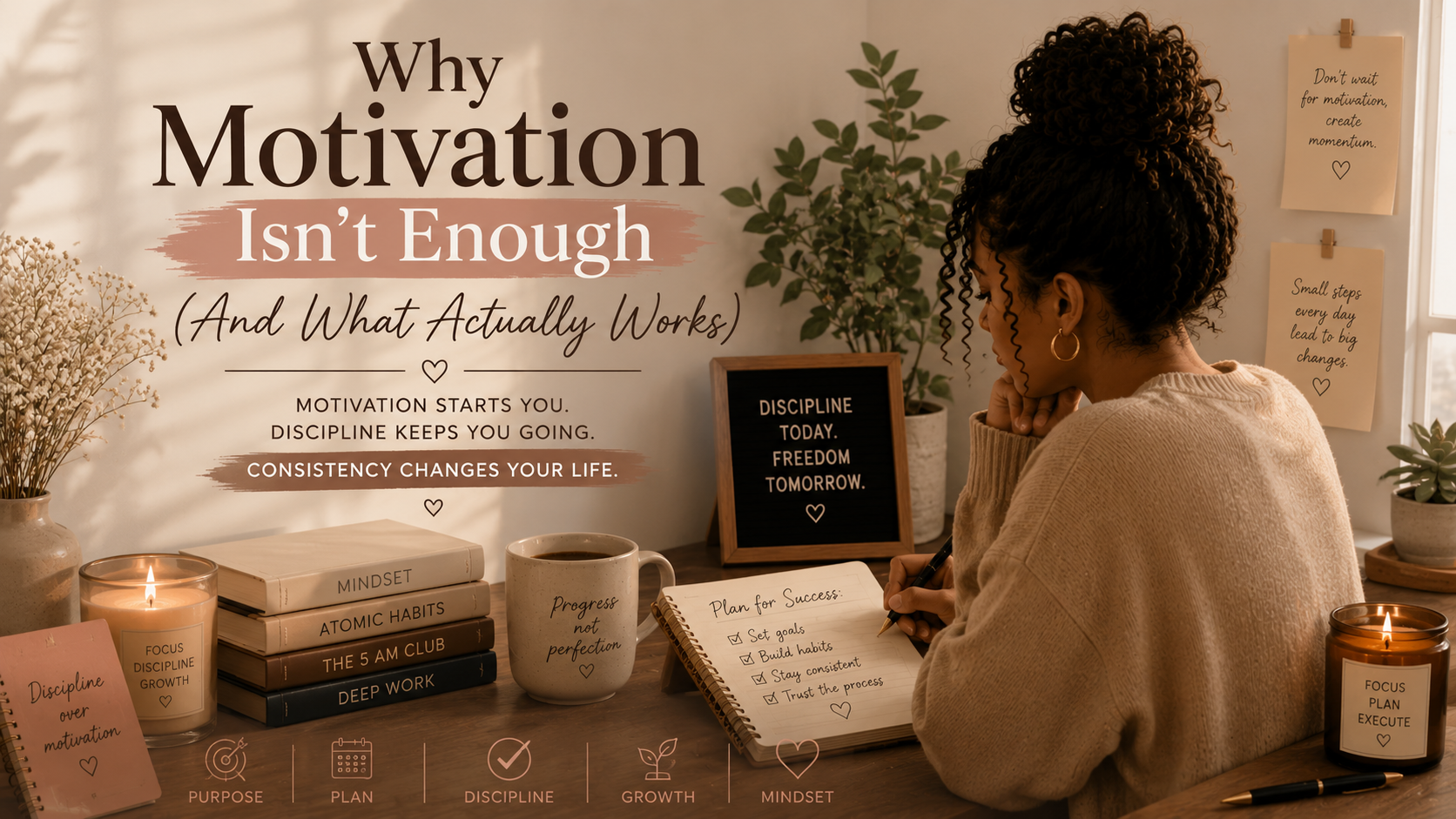
"What makes you motivated?" It's one of those questions that sounds simple until you really sit with it. We hear it in interviews, in classrooms, on social media — usually framed as though motivation is this magical, unlimited resource that some people just have and others don't. But if that were true, why do so many of us start strong on a goal and then quietly fall apart three weeks later?
Here's the honest answer: motivation is real, but it's also deeply unreliable. And until you understand why, you'll keep wondering why the fire inside you keeps burning out.
Understanding Motivation — The Basics
Psychologists will tell you that people are motivated in different ways. There are those who are intrinsically motivated — driven from the inside, by passion, personal meaning, or the simple satisfaction of doing something well. Then there are those who are extrinsically motivated — driven from the outside, by rewards, recognition, approval, or results.
Both are valid. Both are real. And both play a role in how we move through life.
Intrinsic motivation tends to be the more powerful and lasting of the two. Research consistently shows that people who are intrinsically motivated have a greater tendency to maintain their changes long-term. The problem with extrinsic motivation is that once the reward disappears — once the compliments stop, once the novelty wears off — the behavior tends to disappear with it.
But here's what most people miss: even intrinsic motivation isn't enough on its own.
The Problem With Motivation
Motivation feels incredible in the moment. It's that surge of energy that has you downloading a new app, rearranging your whole schedule, and telling yourself this time is different. It's what gets you out of bed early on Day One with a full heart and a clear vision.
But motivation is emotion-based — and emotions fluctuate. They respond to how much sleep you got, how stressed you are, what someone said to you this morning. When you're inspired, you act. When you're tired, overwhelmed, or discouraged, you don't.
"That's why so many people start strong and then stop. Not because they're incapable. But because they built their entire effort on a feeling — and feelings don't show up on command."
So What Actually Works?
If motivation is the spark, what keeps the fire going? The answer isn't one thing — it's a combination of forces that work together to carry you when your feelings don't.
Discipline. This is the one that no one wants to hear, but it's the most honest answer. Discipline is showing up even when you don't feel like it. It's the gap between what you said you wanted and what you're actually doing on a Wednesday afternoon when you're tired and uninspired. Discipline doesn't replace motivation. It carries you when motivation clocks out.
There's also a beautiful thing that happens when you act disciplined consistently: motivation often follows. Many people wait to feel motivated before they act, not realizing that action itself generates the feeling. You don't wait for the spark — you create it by showing up.
Structure. One of the most underrated tools for sustained growth is a system. When something becomes part of your routine, you no longer have to rely on how you feel about it. Research on habit formation shows that repeated behaviors, over time, rewire your brain's reward loops — what started as effortful eventually becomes almost automatic.
Identity. Most people try to change their behavior from the outside in — they set goals, track results, and hope the feelings catch up. But the most lasting change happens from the inside out, when you change how you see yourself. There's a significant difference between saying "I want to be more consistent" and saying "I am someone who shows up." One is a wish. The other is an identity.
Purpose. Motivation fades. But purpose has a longer shelf life. When you are deeply connected to why you're doing something — who it serves, what it builds, what kind of life it leads to — you are more likely to keep going through the hard patches.
The Real Question to Ask Yourself
At some point, you have to stop asking "Do I feel motivated today?" and start asking "Am I committed to the life I say I want?"
Because the truth is — you won't always feel ready. You won't always feel inspired. There will be days when the last thing you want to do is the very thing you need to do. That's not a sign you're on the wrong path. That's just the reality of building anything real.
Motivation is a beautiful starting point. But it was never meant to be your foundation.
A Few Things to Hold Onto
Start where you are. You don't need a surge of motivation to begin — you need one small, honest action in the right direction.
Build systems, not just goals. Goals tell you where you want to go. Systems are what actually get you there.
Shift your identity before you wait for results. Decide who you are now, and let your actions follow.
Connect to your purpose. When the feeling runs dry, let meaning carry you.
And give yourself grace. Discipline is a learned skill, not a personality trait you either have or don't. It's built in the quiet, unsexy, ordinary moments — the ones nobody posts about.
Those moments are where real change lives. — Nette